

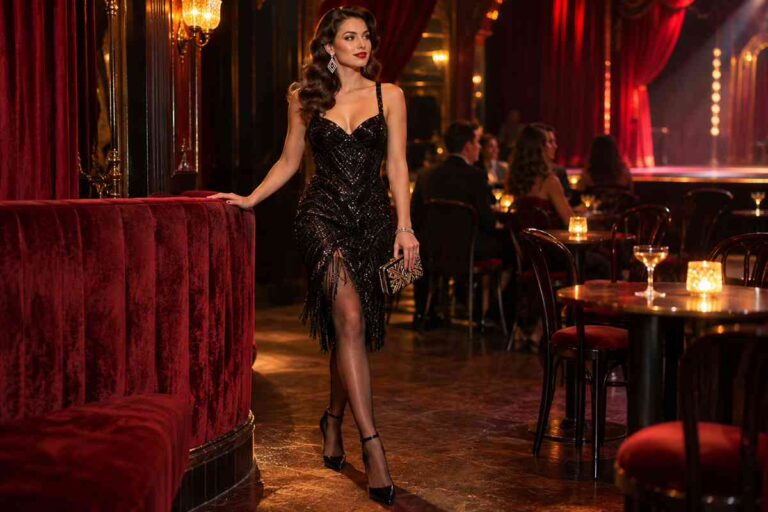
Glitzy costumes, feather fans, larger-than-life personas: the performers at a burlesque show go all out. The good news for everyone in the seats is that you don’t have to.
Most burlesque shows in the US have no formal dress code. Dress the way you would for a nice cocktail bar or a date night: a cocktail dress, a jumpsuit, or dark jeans with a great top or blazer all work. If you love vintage glamour, this is the rare night out where red lipstick, seamed stockings, and a feather boa won’t look like too much. The main exceptions are upscale supper clubs and lounges, which may enforce a smart-casual code, and themed nights, where costumes are part of the fun.
Table of Contents
Is There a Dress Code at a Burlesque Show?

Usually not. Most burlesque happens in bars, nightclubs, and small theaters, and on any given night you’ll see sneakers and sequins in the same row. A few settings do change the rules:
- Supper clubs, lounges, and hotel or casino venues often expect smart casual at a minimum. Leave the athletic wear, ball caps, and flip-flops at home, and you’ll be fine in a button-up and dressy pants or dark jeans.
- Themed nights (nerdlesque, horror, holiday, and tribute shows) often encourage costumes. The event listing will usually say so.
- Fetish or alternative nights may welcome fetish wear. If the listing doesn’t mention it, assume it isn’t the norm.
If you have any doubt, check the venue’s FAQ or the ticket page, since policies change. Then think about comfort as much as looks: seating is often small cabaret tables or bar stools, and packed rooms get warm. The event listing will tell you how long the show runs and whether there’s an intermission. Going in the depths of winter? Our guide to what to wear to a burlesque show in winter covers coats, tights, and coat-check strategy.
Match Your Outfit to the Type of Show

The show’s style is the best clue to what the crowd will be wearing. Check the event description for words like these:
| Type of Show | What to Expect | What to Wear |
|---|---|---|
| Classic or Glamour Burlesque | Striptease built on the slow tease: gowns, opera gloves, feather fans, and elaborate reveals. Dita Von Teese is the best-known modern example. | Lean dressy. A cocktail dress, satin or velvet, vintage-inspired pieces, or a blazer with tailored trousers. |
| Neo-Burlesque | The modern revival. Classic striptease shares the bill with comedy, drag, circus skills, and theatrical mini-dramas, with a strong body-positive streak. | Anything goes. For a modern look, try leather or tailored trousers with a sleek top, a slip dress with boots, or one statement piece like a sequin blazer. |
| Comedy or Variety Burlesque | Acts play like short sketches full of parody and innuendo, and the strip punctuates the joke rather than being the main event. | Smart casual. Playful accessories like a hat or statement gloves fit the mood. |
| Boylesque | Male performers take the stage, in styles ranging from sultry to slapstick and from vintage to drag. | Same as neo-burlesque. Match the theme if the show has one. |
| Nerdlesque | Parody acts built on comics, video games, sci-fi, fantasy, and anime. | Cosplay or a fandom shirt is usually welcome. Comfort first. |
| Horror or Gore Burlesque | Macabre themes, dark-carnival props, and fake blood, often staged around Halloween. | All black, gothic, dark vintage, or full costume with special-effects makeup. |
| Cabaret or Revue | Choreographed numbers, singing, and lavish costumes, with less focus on striptease. | Depends on the venue: cocktail attire at a supper club, smart casual at a bar or theater. |
What to Wear to a Burlesque Show

Pick your comfort level and build from there. Any of these will look right at a typical show:
- Dressy casual (the safe bet): Dark jeans or tailored trousers, a silk or satin top or a fitted button-up, a blazer, and ankle boots, block heels, or dressy flats.
- Classic cocktail: A little black dress (or any color you love), dressed up with the accessories you rarely get to wear: fishnets, evening gloves, a shiny clutch, a fascinator, or an accent belt.
- Vintage glam: A wiggle dress, or a pencil skirt with a fitted sweater or blouse, plus seamed stockings and a red lip.
- Full sparkle: Sequins, fringe, velvet, leather, or a corset top with wide-leg trousers.
A good rule for guests: ordinary evening clothes plus one or two theatrical accents, like opera gloves, a feather boa, or a corset top. A full stage-style costume belongs at nights that invite it. Keep headpieces and big accessories low enough that the people behind you can still see, and skip anything that sheds feathers onto your neighbors. Burlesque crowds tend to welcome every body type, so wear what makes you feel good. For more ideas in extended sizes, browse our plus-size fashion guides.
Four Outfit Ideas for a Burlesque Show
The photos in this section show performers, so treat them as color and mood inspiration rather than literal outfits. Each look below is built from clothes you can wear in the audience.
Glitzy Showgirl:

- A sequined or beaded cocktail dress that hits above the knee, ideally with some fringe, rhinestones, or feather trim.
- One showy accent, not three: elbow-length satin gloves or a feather boa.
- Red or metallic heels. Go as high as you like if you’ll be seated, but older theaters and basement clubs often mean steep stairs.
Retro Pin-Up:

- A swingy circle skirt or high-waisted cigarette pants to highlight your waist.
- A blouse tied at the waist, or a fitted sweater tucked in.
- Bold red lipstick, the signature of classic pin-up makeup.
- Victory rolls or a bandana headband.
Cabaret Vixen:

- A corset or bustier top to cinch the waist.
- Fitted high-waisted black jeans or leather pants to balance it out.
- Pointed stilettos or sleek heeled boots.
- A faux fur shawl or stole draped over your shoulders, which also solves the chilly-coat-check problem.
Vintage Bombshell:

- A 1950s-style swing dress with a sweetheart neckline.
- Seamed stockings for retro detail.
- Peep-toe heels or T-strap pumps.
- A small flower or fascinator tucked into your curls.
What Men Can Wear to a Burlesque Show
Think “nice dinner out” and you’ll fit in almost anywhere:
- The easy default: Dark jeans or chinos, a button-up or fitted knit polo, and a blazer, bomber, or leather jacket. Finish with leather shoes or clean boots.
- A vintage nod: A vest, suspenders, a bow tie or skinny tie, and polished brogues or two-tone shoes.
- Classic or cabaret venues: A suit with no tie, or a velvet blazer if you want to have some fun with it.
- Skip: Gym clothes, ball caps, and cargo shorts. If you wear a fedora or other brimmed hat, take it off once the show starts so the person behind you can see.
Boylesque and themed nights are a good excuse to go louder: a printed shirt, a sequin jacket, or a costume if the listing calls for it. For everyday inspiration, see our men’s fashion section.
What to Wear to a Cabaret Show
For cabaret, the venue matters more than the genre. At a supper club with table service, cocktail attire fits: a dress, a jumpsuit, or tailored separates for women, and a blazer with good shoes for men, tie optional. At a bar, theater, or club night, the same dressy casual that works for burlesque is fine.
Heading to a cabaret-themed party instead of a show? That’s where period costume comes in. Go full 1920s Paris or Weimar-era Berlin with sequins, fringe, a bowler hat, suspenders, fishnets, and a dark lip. These are party looks, not what people wear to an ordinary cabaret show.
Burlesque-Inspired Makeup and Hair

Old Hollywood and pin-up beauty are the natural fit, but none of it is required. Pick one or two of these rather than all of them.
Makeup:
- A bold red or deep berry lip. Matte or long-wear formulas survive a cocktail glass far better than a glossy finish.
- Winged liner. Liquid liner gives the sharpest flick.
- Full, fluttery false lashes.
- A smoky eye in shimmery grays and blacks, if you’re skipping the red lip.
- Highlighter on the cheekbones for a candlelit glow, and a touch of glitter at the outer corners of the eyes if you want it.
Hair:
- Finger waves or victory rolls, the most iconic vintage burlesque styles.
- Pin curls or soft, brushed-out curls for bounce and movement.
- A teased bouffant with a few face-framing tendrils.
- Dramatic side-swept bangs.
- Hair accessories: a mini hat, feather clip, headband, or flower.
For step-by-step help, see our makeup guides and hairstyle tutorials.
Burlesque Show Etiquette for First-Timers
Every show sets its own rules, and the host usually explains them before the first act. These hold true at most venues:
- Make noise. Burlesque runs on audience energy, so cheer, whistle, and applaud each reveal. Keep it kind, though. Lewd comments and heckling are out.
- Bring small bills. Tipping customs vary. Some shows collect tips between acts or pass a tip jar, some take digital tips, and at others tips are appreciated rather than expected. Follow the host’s lead, and never touch a performer.
- Check before you film. Photo rules vary by show, and many don’t allow photos or video during acts. Follow the host’s instructions. Some shows have a house photographer and share pictures afterward.
- Expect partial nudity. Many acts end in pasties and a G-string, but how far performers go depends on the show and local rules. It’s a theatrical performance, not a strip club.
- Choose your seat wisely. Performers sometimes interact with the front rows. If you’d rather not be part of the act, sit farther back.
- Check the age policy. Many shows are 18+ or 21+, and bars will check ID at the door.
What Is Burlesque?

The word comes from the Italian burla, meaning a joke or mockery, and burlesque began as comic theater that poked fun at serious works through parody and exaggeration. Today it’s a variety show that mixes striptease, dance, comedy, and spectacular costumes, and the humor is still a big part of it.

Burlesque dance borrows from jazz, ballet, and showgirl choreography, and each act tells a small story through costume, props, and the order in which things come off. Want a preview before your first show? Check out this YouTube video of the dance style in all its feathered glory.
A Short History of Burlesque

Burlesque has always reveled in shaking things up. In 19th-century London theaters, it meant musical parodies of Shakespeare, opera, and classical myths, packed with puns and exaggerated drama.
In 1868, English performer Lydia Thompson brought her troupe, the British Blondes, to New York, and American burlesque took off. Over the following decades it grew into a variety format of comedians, chorus girls, and, by the 1920s and 1930s, striptease. Stars like Gypsy Rose Lee became household names, while Paris revue legend Josephine Baker helped define the glamour that burlesque performers still draw on.
The party didn’t last. In 1937, New York Mayor Fiorello La Guardia’s administration refused to renew burlesque theater licenses, and by the early 1940s the city’s burlesque houses had effectively shut down. The form faded nationally over the following decades.
But you can’t keep a good tease down. In the 1990s, a new generation of performers in cities like New York and Los Angeles revived burlesque, and that neo-burlesque scene is what you’ll most likely see today: cheeky, inclusive, often hilarious, and still happy to bend the rules.


